
Helping Leaders Navigate Their Next Chapter
Thirty years of success and the most important work of your life hasn’t started yet.
By Peter Vaughn → Linkedin - E-mail
You’ve built a real career. Thirty years of results, relationships, and responsibility. You’ve led teams, driven growth, and navigated complexity that would break most people.
And somewhere in the middle of all of it, often on a Sunday night, or a quiet Saturday when there’s finally nothing on the calendar, a question arrives that your career never prepared you for:
Is this everything? And if not, what is?
That question is not a crisis. It’s a signal. Learning to hear it clearly, rather than suppress it, rationalize it, or outrun it, is where the real work begins.
I know this because I’ve lived it. And because, for the last several years, guiding high-performing leaders through exactly this moment has become the most meaningful work of my own career. Here is some of what I’ve learned, and what I believe can potentially change the trajectory of yours.
The Question Doesn’t Mean Something Is Wrong
When accomplished leaders first feel this restlessness, their instinct is to pathologize it. Something must be broken. I must be ungrateful. I’ve worked this hard, so why isn’t it enough?
I want to challenge that framing directly, because it has it exactly backwards. The question “is this everything?” is not a sign that something is wrong with you. It’s a sign that something is working. It means you’ve reached a level of self-awareness your career didn’t demand of you until now, and that your inner compass still functions, even if you haven’t consulted it in years.
I felt it myself, early on. About five years into my first job I had a role I genuinely loved with a great boss, meaningful work, and in a city I knew well. Everything was right on paper. And yet I kept circling the same question: were there parts of me that simply weren’t being used? Was there more?
That restlessness is what led me to apply to INSEAD, L’Institut Européen d’Administration des Affaires in France, at the time virtually unknown in the United States. I applied to INSEAD and nowhere else. I moved to France, then to London, built a global career with American Express across continents and cultures, and eventually found my way to the work I do today.
Looking back, the restlessness was never a problem to solve. It was a direction to follow. If you’re feeling it now, it deserves the same respect.
The Trigger Is Different for Everyone. The Feeling Almost Never Is.
In my work, I’ve watched this moment arrive a hundred different ways.
Sometimes it’s a dramatic external event: a reorganization, a layoff, a health scare for you or someone close to you. Sometimes it’s a conversation with your partner that starts one place and ends somewhere neither of you expected. Sometimes it’s a performance review that, for the first time, feels completely hollow, not because the feedback was bad, but because you suddenly don’t care the way you used to. And sometimes there’s no trigger at all. You wake up one morning, look at your calendar, and feel a flatness you can’t explain.
Whatever sets it off, the emotional texture underneath is remarkably consistent: uncertainty, fear, confusion, and a quiet but insistent sense of being stuck.
There’s also something most leaders won’t say out loud. It’s lonely. You don’t want to tell your spouse everything because you don’t want to alarm them. You can’t show this to your colleagues because you’ve spent years being the one with the answers. You hesitate to raise it with friends because high performers aren’t supposed to have this kind of question. So it sits there, unanswered, growing heavier.
The first thing I tell every leader I work with is this: the loneliness is normal, and so is the question. What isn’t sustainable (or productive) is carrying it alone.
Stop Hunting for Purpose. Start Naming Your Drivers.
The leaders I work with almost never walk in talking about purpose, and that makes sense to me. Very few people build a thirty-year career by sitting down one quiet afternoon and defining their life’s purpose. They build it by seizing the right opportunity at the right moment, doing what they were genuinely good at, having real impact, and moving forward. That isn’t an absence of purpose. It’s how exceptional careers usually get made.
So I don’t start with purpose, and I’d steer you away from it as a starting point too. It sounds like the clarifying question, but it usually does the opposite. “Purpose”, as a starting point, is either too enormous to define, which produces paralysis, or it yields a tidy line that sounds right in conversation and collapses the moment you have to make a real decision with it.
I start somewhere smaller and far more useful: not with what should have driven you, but what actually did. What made you take the stretch role over the safe one? What kept you highly engaged in a job long after the rest of it had gone stale? What made the twelve-hour flight feel worth it? What kind of impact made the long hours add up to something?
Answer those questions (and others like it) honestly and a pattern emerges. Your real drivers have been running underneath your entire career. They’re specific to you, they’ve been present the whole time, and in most cases no one has ever sat you down and asked you to look at them this directly. That excavation is where I begin, and it’s less about new information than about finally organizing what was already there into something you can use.
One leader I worked with came to me convinced he had simply hit a wall. He had the title, the track record, the security, etcetera, but none of it was landing the way it used to. We didn’t start with what he should do next. We started with what had actually driven him across his career, the moments he’d felt most engaged, most inspired and most authentically himself. That reconnection, to his real motivators rather than the ones he assumed he was supposed to have, was the turning point. Two years later, he still uses what we uncovered as the guideposts for the decisions he makes.
The Identity Problem Nobody Warns You About
Your corporate badge was never just an ID card.
For thirty years it answered every hard question about who you were, where you belonged, and why your work mattered. It told you where to go on Monday morning. It handed you a title, a team, and a kind of purpose-by-proxy. So when that context changes, whether you choose to leave or the choice is made for you, it doesn’t just change your schedule. It removes the scaffolding that has been holding up your identity.
That can be disorienting in a way successful people are rarely prepared for. The question is no longer “What do I do next?” It becomes “Who am I when I’m not defined by what I do?”
That isn’t a weakness. It’s one of the most profound questions a person can face, and answering it for real, not just performing an answer, takes a kind of reflection the pace of a corporate career almost never allows. What I’ve found in my own life and in the leaders I work with is that the person you actually are has been there all along, underneath the roles and the performance and the accumulated expectations. The work of this phase isn’t to reinvent yourself. It’s to recover yourself, and then deliberately choose what to build with what you find.
This Is Not Your Last Chapter
Many of the leaders I meet in their forties and fifties carry a quiet assumption: that what they’re navigating is an ending. A winding down. A final chapter before things get smaller and quieter.
I believe that assumption is wrong, and it’s expensive. If you’re in your late forties or early fifties and in good health, you likely have fifteen to twenty productive years ahead of you. In knowledge work, whether it be leadership, strategy, mentorship, governance, advisory roles, or entrepreneurship, those are often your highest-leverage years, not your last ones. You have pattern recognition that took decades to build, emotional intelligence that only comes from lived experience, and a network, reputation, and set of hard-won skills that no one in their twenties or even thirties can replicate. Your capacity isn’t what changes. What changes is what you choose to do with it.
This is why I don’t help people find just their next job. I help them find their ideal opportunity, the one that finally matches who they are with what they do. The leaders I work with don’t end up with just a résumé and a job title. They leave knowing what drives them, what they need in order to feel fully alive in the work, and how to evaluate every future opportunity against that understanding. That kind of clarity outlasts any single role, because it doesn’t expire.
The Conditions, Not the Non-Negotiables
People often ask what pillars I work from, and what the non-negotiables are for a successful next chapter. My honest answer is that I don’t bring them into the room. We find them together.
Your non-negotiables aren’t the same as mine, or your colleague’s, or anyone else’s. They’re particular to your history, your values, your drivers, and the things that have made you most effective and most alive across your career. They’re discovered, not assumed.
What I do bring are the conditions that make the work possible:
Honesty. Not just with me, but with yourself, about what you actually want, what has actually worked, and what you’ve been quietly avoiding. You can’t build the right next chapter on comfortable stories.
Commitment to the work. Real reflection takes effort. It surfaces things that have been submerged, and it asks you to sit with uncertainty longer than a high performer instinctively wants to. It’s worth it, but only if you’re willing to do it.
Ownership of the time. This is your process, not mine. I’ll structure it, push you when you need it, and give you space when you need that. But the direction belongs to you.
When those conditions are in place, the non-negotiables reveal themselves, the drivers come into focus, and the shape of the right opportunity starts to emerge, not as a job description, but as a set of criteria that are genuinely yours. From there, every decision gets easier.
What About Regret?
Not everyone arrives at this crossroads with a clean record. Some leaders carry the weight of a company that didn’t survive, a role they were pushed out of, a relationship that suffered while the career thrived, a decade spent becoming the wrong version of themselves.
Regret is real, and I don’t minimize it. But I’ve seen something consistent. When you take a leader back to a difficult moment and help them extract what it actually taught them about their values, their judgment, and what they truly care about, the regret doesn’t vanish. It transforms. It stops being a verdict on the past and becomes information about the future. The only question is whether you’re willing to use it.
The leaders who do this work, who look honestly at what happened and what it meant, come away with something better than a clean slate. They come away with self-knowledge, and self-knowledge, properly applied, is the foundation of everything that follows.
The One Sentence
At the end of our work together, I ask every leader to be able to say one thing. Not a mission statement. Not a five-year plan. Just this:
“I know what drives me, I know what I need, and I will not accept an opportunity that doesn’t honor both.”
That sentence, and the clarity beneath it, is what I mean by the Next Chapter. It isn’t a quieter life or a smaller ambition. For many of the leaders I work with, it’s the first time in their career that their outer work and their inner person are finally pointed in the same direction.
I’ve watched people in their late forties walk away from roles that looked impressive and felt empty, and build something that left them more alive at fifty-five than they were at thirty-five. I’ve watched people who were pushed out of organizations come to see it as the best thing that ever happened to them. I’ve watched leaders who were sure they were winding down realize they were just getting started.
That’s what this chapter can be. Not the last one, but the one everything else was preparing you for.
What the Work Actually Looks Like
People often ask what the work is in practice, so let me be plain about it. It moves through three phases, at a pace that lets real reflection happen rather than rushing to an answer.
We begin with your motivators: the conditions under which you’ve done your best work and felt most alive, where your energy actually comes from, what success has truly looked and felt like for you. From there we get specific about your drivers, the personal, emotional, and functional forces that genuinely move you. Only then do we turn to the ideal opportunity itself, profiling the kinds of roles that could satisfy all of it, and building the tools to go find them: a personal narrative that’s authentically yours, and a set of filters that let you assess any opportunity for fit quickly.
It’s one-to-one work, and it doesn’t require you to step away from anything. The phases can run alongside a live search, networking, and interviewing, so the reflection sharpens the hunt in real time rather than delaying it. You don’t need to arrive with anything prepared, or to have decided to leave anything. You need to be willing to look honestly, and to do the work between our conversations as much as during them. If that kind of self-reflection isn’t what you’re looking for, I’ll say so, and I’m glad to point you to coaches who focus elsewhere.
If any of this resonates, if you’re sitting with a version of that quiet question and aren’t sure what to do with it, I’d welcome a conversation. Not a pitch. Just a conversation. And if you’re not ready for even that, sit with the question for a week and see if it’s still there. If it is, you’ll know.
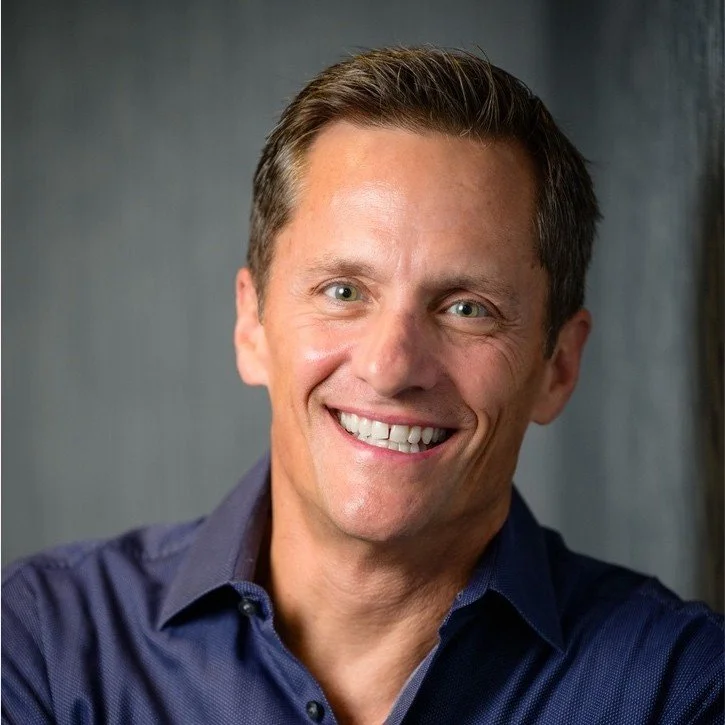
Peter Vaughn
Executive Coach & Advisor | 25-Year AmEx Veteran | Gift Card and Centurion Lounge Co-Creator | Board Member